Social learning
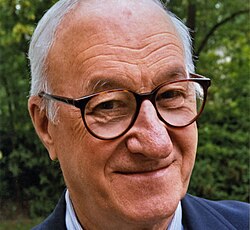
Albert Bandura
1925–2021
A short biography
Bandura, a psychologist at Stanford, is known for research on observational learning and self-efficacy. His work considered relationships between behaviour and social environments.
Born in Canada, Bandura brought social models and beliefs about action into learning research at Stanford. Bobo-doll studies are familiar examples, but do not encompass the whole theory.
What does this figure represent in psychology?
He represents research into learning by observing others as well as through direct consequences. Self-efficacy concerns beliefs about carrying out a particular action.
Social cognitive theory examines reciprocal influences among person, behaviour and environment. Self-efficacy concerns particular actions rather than general self-esteem. Learning through observation is distinct from performing a behaviour in every circumstance.
Key concepts
Self-efficacy: belief about performing a specific action. Reciprocal determinism: mutual influences of person, behaviour and environment.
A question for the reader
Why might acquiring a skill and performing it be measured as different outcomes?
Selected works and publications
Links lead to original texts, institutional catalogues or publication records; not every link provides a free full text. Work titles are retained in their original or established language.
Reading in context
Self-efficacy is not a general confidence score or a promise that belief alone makes anything possible.
Sources
Source check: 16 October 2026. Institutional biographies and accessible bibliographic records were consulted; some records were checked through indexed summaries. Complete works were not all read. Concept connections and questions were written for this collection.