Philosophical roots
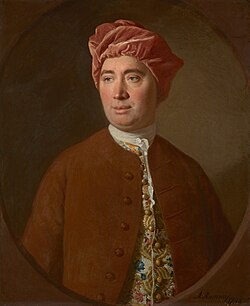
David Hume
1711–1776
A short biography
A philosopher and historian of the Scottish Enlightenment, Hume approached human nature through experience. He wrote about knowledge, morality and the passions, giving habit and feeling an important place in explaining action.
What does this figure represent in psychology?
Impressions, ideas and association address how mental contents connect. His account of causation helps distinguish repeated conjunction from knowledge of necessity. Students can compare this with contemporary questions about correlation and causation without treating it as modern statistics.
Key concepts
Association: connections among ideas through resemblance, proximity and causal expectations. Custom: repetition shaping expectation.
A question for the reader
Is succession of two events sufficient to establish causation?
Selected works and publications
- A Treatise of Human Nature1739–1740
Links lead to original texts, institutional catalogues or publication records; not every link provides a free full text. Work titles are retained in their original or established language.
Reading in context
Historical influence does not establish every claim today. Read original works in their historical and methodological context.
Sources
Source check: 16 October 2026. Institutional biographies and accessible bibliographic records were consulted; some records were checked through indexed summaries. Complete works were not all read. Concept connections and questions were written for this collection.