Learning and behaviour
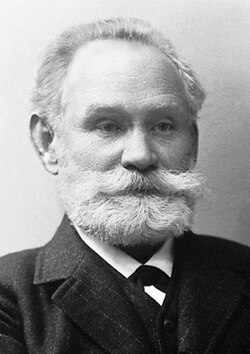
Ivan Pavlov
1849–1936
A short biography
The Russian physiologist Pavlov received the 1904 Nobel Prize in Physiology or Medicine for research on digestion. His work on conditioned reflexes influenced experimental research on learning.
A physiologist studying digestion, he received the 1904 Nobel Prize for that work. Conditions surrounding salivary responses opened a different line of research relevant to learning.
What does this figure represent in psychology?
His work helped establish the classical-conditioning tradition, examining how a stimulus gains significance through its relation to another event.
Classical conditioning examines relationships between stimuli and responses, whereas operant conditioning centres on behaviour and consequences. Extinction describes reduced responding under particular conditions, not necessarily complete erasure of learning.
Key concepts
Conditioned stimulus: a cue associated with a response through learning. Extinction: reduced responding when the expected relationship no longer holds.
A question for the reader
Compare Pavlov and Skinner: are the key relationships between stimuli, or between behaviour and consequences?
Selected works and publications
Links lead to original texts, institutional catalogues or publication records; not every link provides a free full text. Work titles are retained in their original or established language.
Reading in context
His Nobel Prize should not be described as an award directly for psychology or the dog-conditioning experiments.
Sources
Source check: 16 October 2026. Institutional biographies and accessible bibliographic records were consulted; some records were checked through indexed summaries. Complete works were not all read. Concept connections and questions were written for this collection.