Analytical psychology
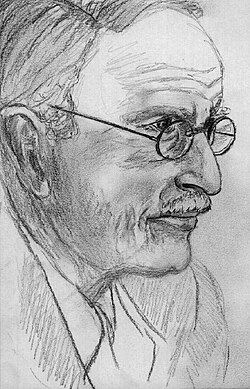
Carl Gustav Jung
1875–1961
A short biography
The Swiss psychiatrist Jung developed the analytical-psychology tradition. Unconscious processes, psychological types and individuation are among its central themes.
The Swiss psychiatrist developed analytical psychology after his collaboration with Freud. His interests in myth, religion and cultural symbols help explain his influence beyond clinical work.
What does this figure represent in psychology?
He introduces a different tradition of interpreting personality, symbols and self-understanding. Here he appears as a historical perspective beyond the homepage sequence.
Archetypes, the collective unconscious and individuation belong to this theoretical tradition. The influence of introversion and extraversion does not establish every Jungian claim. Symbolic interpretation and experimental evidence should be considered separately.
Key concepts
Individuation: a theoretical process of relating different aspects of the self. Archetype: a proposed shared symbolic pattern in analytical psychology.
A question for the reader
Does finding a symbol in several cultures prove it has the same meaning for everyone?
Selected works and publications
Links lead to original texts, institutional catalogues or publication records; not every link provides a free full text. Work titles are retained in their original or established language.
Reading in context
Types are not used to assign fixed labels to people; a historical concept is not the same as a contemporary assessment instrument.
Sources
- C. G. Jung Institute · Analytical psychology framework
- Psychological Types · original text edition record
Source check: 16 October 2026. Institutional biographies and accessible bibliographic records were consulted; some records were checked through indexed summaries. Complete works were not all read. Concept connections and questions were written for this collection.