Memory and self
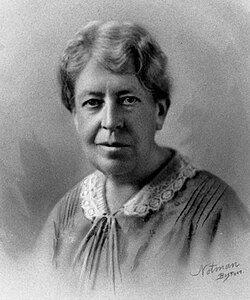
Mary Whiton Calkins
1863–1930
A short biography
The US philosopher and psychologist established a laboratory at Wellesley and trained at Harvard. Despite completing doctoral requirements, she was denied the Harvard degree because of sex discrimination. In 1905 she became the first woman president of the American Psychological Association.
What does this figure represent in psychology?
Her paired-associate work contributed to memory research, while self-psychology considered the subject who experiences. Her career also shows why access to institutions, degrees and recognition belongs within the history of science.
Key concepts
Paired associates: examining learning between items presented together. Self: the experiencing subject’s place in psychological inquiry.
A question for the reader
Do a researcher’s contributions always align with institutional recognition?
Selected works and publications
Links lead to original texts, institutional catalogues or publication records; not every link provides a free full text. Work titles are retained in their original or established language.
Reading in context
Historical influence does not establish every claim today. Read original works in their historical and methodological context.
Sources
Source check: 16 October 2026. Institutional biographies and accessible bibliographic records were consulted; some records were checked through indexed summaries. Complete works were not all read. Concept connections and questions were written for this collection.