Philosophical roots
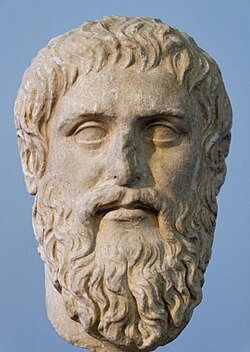
Platon
c. 429–347 BCE
A short biography
The Athenian philosopher Plato developed inquiry through dialogues shaped by the Socratic tradition. The Academy became an influential setting for philosophical education. Knowledge, justice and the good life connect across his works. His character Socrates is not simply a transcript of the historical person.
What does this figure represent in psychology?
His discussions of different aspects of the soul make internal conflict a philosophical problem. This is neither a personality test nor a brain model. Students can examine how a conception of the person shapes ethics and education, then compare it with Aristotle.
Key concepts
Dialogue: inquiry through questions and objections. Forms: a framework distinguishing changing examples from stable objects of knowledge.
A question for the reader
Is knowing that an action is good sufficient to perform it? Distinguish Plato’s explanation from an experimental finding.
Selected works and publications
- Politeia · Devlet / RepublicAntiquity
Links lead to original texts, institutional catalogues or publication records; not every link provides a free full text. Work titles are retained in their original or established language.
Reading in context
Historical influence does not establish every claim today. Read original works in their historical and methodological context.
Sources
Source check: 16 October 2026. Institutional biographies and accessible bibliographic records were consulted; some records were checked through indexed summaries. Complete works were not all read. Concept connections and questions were written for this collection.